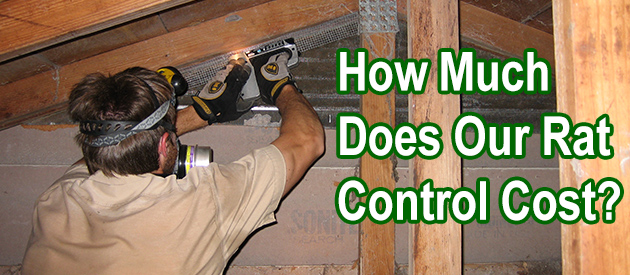
Union County, Elizabeth Rat Control Situation:
Hi David....I just read your article on mice removal and am having an infestation problem in my attic. I have had several pest control companies over to my house and none of them have been able to solve my problem. The first company I had contracted was called Mack pest control and they threw a bunch of bait pouches around the attic and set traps for " Flying squirrels" which there were no flying squirrels and then eventually gave up. The next company I hired was a company called Apex Pest and Termite, again they failed to find the entrance points and eventually gave up as well. The current company I have is Orkin and they have not been able to pinpoint where the mice are getting in either. In fact the latest technician put down (4) glue boards in the attic and a block of the green poison bars in the center of each glue board lol. I am definitely not an expert in rodent control...but I highly doubt that is the proper method. This has been an ongoing problem now for 3 years, I have a 3,000 sq.ft. vinyl siding house with a pretty huge attic so the possible entry points could be anywhere, I would greatly appreciate any help you could give me on this matter, such as what company I could hire or an effective do-it-yourself strategy. Thank you for your time and hope to hear from you soon.
Elizabeth Rat Control Tip of The Week
What Is The Largest Size A Rat Can Get To Be?
With an average lifespan of about 2 - 3 years, some species of rats can grow as large as 4 pounds. But on average, almost all rats are bigger than mice. Also, the size of a rat fairly depends on the specie and the sex of the rat. Male rats usually are larger than females. They have a longer body frame with tails as long as their body and can grow as big as 2 lbs.
Domesticated rats usually do better when it comes to size mainly because they are provided with all they need to grow properly and healthily. For pet rats, an adult rat can grow to a length of 9 to 11 inches with a tail length of 7 to 9 inches. If properly managed, some large species of rats can even grow as long as 20 inches. It all depends on how well the rats are being managed and taken care of.
One of the most fascinating thing about rats is that having a large body size doesn't mean they won't be able to pass through small openings and enter into your home. Rats can compress their body in order to be able to pass through small openings. Provided the opening is wide enough to allow the easy passage of its head, it will pass through. Therefore, you shouldn't consider the fact that the rats in your neighborhood are too big to gain access to your home through small openings. Instead, you need to seal all small openings up as soon as possible to avoid a rat infestation.
When it comes to rats with large sizes, the Bosavi woolly rat is one of a kind. This specie of rat can weigh up to 3.5 lbs. and grow as long as 32 inches. Although, this particular specie of rat can only be found in volcanic caves.